Staff Augmentation vs In-House Hiring: Which Is Better?
Introduction
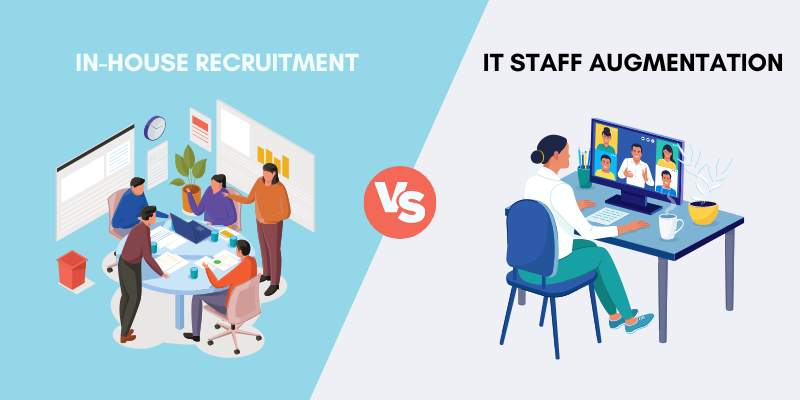
Choosing between staff augmentation and in-house hiring can feel like deciding between renting a car or buying one. Both get you where you need to go—but the journey, cost, and flexibility differ dramatically. So, which option is better for your business?
The truth is, there’s no one-size-fits-all answer. It all depends on your goals, budget, and how fast you need to move. Let’s break it all down in plain English so you can make the smartest decision possible.
Understanding Staff Augmentation
What Is Staff Augmentation?
Staff augmentation is like hiring extra hands on demand. Instead of bringing someone on permanently, you temporarily add skilled professionals to your team—usually through a third-party provider.
Think of it as “plug-and-play talent.” You get the expertise you need, exactly when you need it.
Types of Staff Augmentation
Short-Term Augmentation
Need help for a quick project? Short-term augmentation is perfect. It’s ideal for tight deadlines or sudden workload spikes.
Long-Term Augmentation
This is more like a long-term partnership. You still don’t officially “hire” the employee, but they work with your team for an extended period.
Understanding In-House Hiring
What Is In-House Hiring?
In-house hiring is the traditional approach—recruiting employees who become a permanent part of your company. They’re on your payroll, fully integrated into your culture, and committed long-term.
Traditional Hiring Process
This process includes job postings, interviews, onboarding, and training. It’s thorough—but often slow and expensive.
Key Differences Between Staff Augmentation and In-House Hiring
Flexibility
Staff augmentation is incredibly flexible. You can scale your team up or down like adjusting volume on your phone.
In-house hiring? Not so much. Once you hire someone, you’re committed.
Cost Considerations
Staff augmentation often saves money in the short term—no benefits, no long-term salaries.
In-house hiring involves salaries, benefits, office space, and more. It’s a bigger financial commitment.
Control and Management
With in-house teams, you have full control. They follow your processes and align with your culture.
With augmented staff, control is shared—you manage tasks, but they may follow external protocols too.
Advantages of Staff Augmentation
Scalability
Need five developers today and only two next month? No problem. Staff augmentation lets you scale effortlessly.
Access to Global Talent
You’re not limited by geography. You can tap into talent from anywhere in the world.
Faster Hiring
Forget months of recruitment. Staff augmentation can fill roles in days—or even hours.
Disadvantages of Staff Augmentation
Communication Challenges
Different time zones and languages can create friction. Miscommunication can slow things down.
Dependency on External Talent
Relying too much on external professionals can be risky if they suddenly leave.
Advantages of In-House Hiring
Strong Company Culture
In-house employees live and breathe your company values. They’re invested in your mission.
Better Team Collaboration
Face-to-face interactions (or even regular virtual ones) build stronger teamwork and trust.
Disadvantages of In-House Hiring
Higher Costs
Salaries, insurance, equipment—it all adds up quickly.
Slower Hiring Process
Finding the right candidate can take weeks or even months. And during that time, your work might stall.
When Should You Choose Staff Augmentation?
Staff augmentation is ideal when:
- You need specialized skills quickly
- You’re working on short-term projects
- Your workload fluctuates
- You want to reduce hiring risks
It’s like calling in reinforcements when the battle gets intense.
When Should You Choose In-House Hiring?
In-house hiring makes sense when:
- You need long-term commitment
- You’re building a core team
- Company culture matters deeply
- You want full control over processes
Think of it as building your home team for the long haul.
Hybrid Approach: The Best of Both Worlds
Why not mix both?
Many companies use a hybrid model—keeping a strong in-house team while bringing in augmented staff when needed. It’s like having a solid core with flexible extensions.
This approach offers stability and agility.
Factors to Consider Before Making a Decision
Business Goals
Are you scaling quickly or building for the future? Your goals will guide your choice.
Budget
Short-term savings vs long-term investment—what matters more to you right now?
Project Duration
If your project is temporary, staff augmentation is usually the smarter move.
Conclusion
So, staff augmentation vs in-house hiring—which is better?
It depends.
If you value speed, flexibility, and cost-efficiency, staff augmentation might be your best bet. But if you’re focused on long-term growth, culture, and stability, in-house hiring is the way to go.
In many cases, the smartest strategy isn’t choosing one—it’s combining both.
At the end of the day, your hiring strategy should work for you, not the other way around.
FAQs
1. Is staff augmentation cheaper than in-house hiring?
Yes, in the short term. You save on benefits, training, and long-term commitments, but costs can add up over time.
2. Can augmented staff become full-time employees?
Sometimes, yes. Many companies transition augmented staff into permanent roles if they’re a good fit.
3. What industries benefit most from staff augmentation?
Tech, IT, healthcare, and creative industries often rely heavily on staff augmentation.
4. Does staff augmentation affect team culture?
It can, especially if not managed well. Clear communication and inclusion help bridge the gap.
5. What is the biggest risk of in-house hiring?
The biggest risk is long-term commitment—especially if the hire turns out to be a poor fit.


