The Next Generation of Distributed AI “Superfactories”
Introduction
Artificial intelligence is no longer just a buzzword tossed around in tech conferences or startup pitches. It’s becoming the backbone of modern civilization. From healthcare diagnostics to self-driving vehicles, AI is rapidly weaving itself into the fabric of our daily lives. But behind every groundbreaking AI application lies an enormous computational engine quietly working around the clock.
Welcome to the era of distributed AI “superfactories.”
Think of these superfactories as gigantic digital power plants—except instead of generating electricity, they generate intelligence. These systems combine thousands of interconnected processors, cloud platforms, edge devices, and AI accelerators to train and deploy advanced machine learning models at unimaginable scale.
And honestly? We’re only scratching the surface.
The next generation of distributed AI superfactories promises to redefine industries, economies, and even how humans interact with technology itself. Let’s dive deep into what these systems are, why they matter, and how they’re shaping the future.
Understanding Distributed AI Systems
What Distributed AI Means and Why It Matters
Distributed AI refers to artificial intelligence systems that spread workloads across multiple machines, servers, or geographic locations. Instead of relying on a single computer, distributed AI breaks tasks into smaller pieces and processes them simultaneously.
Imagine trying to build a skyscraper alone. Impossible, right? But with thousands of workers collaborating, the project becomes manageable. Distributed AI works the same way.
Modern AI models are massive. Training a large language model or autonomous driving system requires enormous computing power and data processing capabilities. A single machine simply can’t handle the workload efficiently anymore.
That’s where distributed systems shine.
From Data Centers to AI Superfactories
Traditional data centers were designed primarily for storage and basic cloud computing. AI superfactories, however, are purpose-built ecosystems optimized specifically for AI training and inference.
These next-gen facilities include:
- Massive GPU clusters
- AI accelerators
- High-speed networking
- Edge computing nodes
- Autonomous orchestration systems
The result? Lightning-fast AI development cycles and near-limitless scalability.
The Rise of Intelligent Automation
AI superfactories automate not only computations but also infrastructure management itself. Smart orchestration software dynamically allocates resources, balances workloads, and optimizes energy consumption in real time.
It’s almost like the factory manages itself.
What Are AI Superfactories?
Defining the Concept
An AI superfactory is a highly specialized distributed computing ecosystem designed to produce, train, optimize, and deploy AI models at industrial scale.
The term “superfactory” isn’t just marketing hype. These facilities operate similarly to advanced manufacturing plants:
- Raw material = Data
- Machinery = GPUs and AI chips
- Production line = Distributed computing pipelines
- Final product = Intelligent AI models
The bigger and smarter the infrastructure, the more sophisticated the AI output becomes.
Core Components of AI Superfactories
The Role of High-Speed Interconnects
Speed matters enormously in distributed AI systems. If thousands of processors can’t communicate efficiently, performance bottlenecks emerge quickly.
That’s why next-generation networking technologies like InfiniBand and ultra-low-latency Ethernet are critical. These interconnects allow AI clusters to share data almost instantly.
AI Chips and Accelerators
General-purpose CPUs alone are no longer enough for modern AI workloads.
Specialized hardware now dominates AI infrastructure, including:
- GPUs
- TPUs
- Neural processing units (NPUs)
- AI inference accelerators
These chips dramatically improve performance while reducing energy consumption.
Why Distributed AI Is the Future
Real-Time Data Processing
Modern businesses generate staggering amounts of data every second. Distributed AI superfactories process this information in real time, enabling faster and smarter decision-making.
For example:
- Banks detect fraud instantly
- Hospitals identify diseases earlier
- Logistics companies optimize routes dynamically
The speed advantage is transformative.
Improved Scalability and Flexibility
One of the greatest strengths of distributed AI systems is elasticity. Organizations can scale computing resources up or down depending on workload demands.
Need more power for training a massive AI model? Add more nodes.
Traffic drops overnight? Reduce resource allocation automatically.
This flexibility reduces waste while maximizing efficiency.
Industries Being Transformed by AI Superfactories
Healthcare and Drug Discovery
AI superfactories are revolutionizing medicine faster than many people realize.
Distributed AI can analyze:
- Genetic data
- Medical images
- Clinical trial results
- Drug interaction simulations
What once took years can now happen in weeks or even days.
Researchers are already using AI to accelerate cancer detection, protein folding predictions, and personalized treatment development.
Manufacturing and Robotics
Factories themselves are becoming intelligent.
AI-powered robotics can:
- Predict equipment failures
- Optimize supply chains
- Improve product quality
- Reduce downtime
Smart manufacturing plants essentially become self-improving ecosystems.
Finance and Risk Management
Financial institutions rely heavily on AI superfactories for:
- Fraud detection
- High-frequency trading
- Market forecasting
- Credit risk analysis
Distributed AI processes millions of transactions simultaneously while identifying patterns humans would never notice.
Autonomous Transportation
Self-driving cars produce enormous volumes of sensor data every second.
Distributed AI systems train autonomous driving models using:
- LiDAR data
- Camera feeds
- Traffic simulations
- Environmental conditions
Without AI superfactories, truly autonomous transportation would remain impossible.
The Technology Powering AI Superfactories
Edge Computing Integration
Not every AI task should happen in a centralized data center.
Edge computing moves AI processing closer to where data is generated—whether that’s a factory floor, a hospital device, or a smart vehicle.
This reduces latency dramatically.
Think about autonomous vehicles. A car can’t wait several seconds for a remote cloud server to make braking decisions. Edge AI handles these tasks instantly.
Cloud-Native AI Platforms
Cloud computing provides the foundation for distributed AI scalability.
Cloud-native platforms enable organizations to:
- Deploy AI globally
- Access on-demand computing power
- Reduce infrastructure costs
- Collaborate across regions
Hybrid cloud architectures are becoming especially important for balancing performance and security.
Federated Learning Models
Privacy concerns are driving the rise of federated learning.
Instead of centralizing sensitive data, federated AI trains models locally across distributed devices while sharing only model updates.
This approach enhances privacy while still improving AI performance.
Challenges Facing Distributed AI Superfactories
Energy Consumption Concerns
Here’s the uncomfortable truth: AI infrastructure consumes enormous amounts of electricity.
Training advanced AI models can require as much energy as entire towns use in a year.
As AI demand grows, energy efficiency becomes a critical challenge.
Cybersecurity Risks
The larger and more interconnected AI systems become, the more vulnerable they are to cyberattacks.
Potential threats include:
- Data breaches
- AI model poisoning
- Infrastructure sabotage
- Ransomware attacks
Securing AI superfactories requires advanced cybersecurity strategies and continuous monitoring.
Data Privacy and Governance
Who owns AI-generated insights?
How should sensitive data be managed?
Can AI systems remain unbiased?
These questions are becoming increasingly important as AI expands globally. Governments and organizations must develop robust governance frameworks to ensure ethical AI deployment.
Sustainability in Next-Generation AI Infrastructure
Renewable Energy Integration
Major technology companies are investing heavily in renewable-powered AI infrastructure.
Solar farms, wind energy, and hydroelectric power are increasingly supporting massive AI data centers.
Sustainability isn’t optional anymore—it’s becoming a business necessity.
Energy-Efficient AI Hardware
Chip manufacturers are racing to create more efficient AI processors.
New architectures focus on:
- Lower power consumption
- Reduced heat generation
- Improved performance-per-watt
- Advanced liquid cooling systems
Efficiency innovations may ultimately determine which companies dominate the AI race.
The Economic Impact of AI Superfactories
Job Creation and Workforce Transformation
While some fear AI will eliminate jobs entirely, the reality is more nuanced.
AI superfactories are creating demand for:
- AI engineers
- Data scientists
- Cybersecurity experts
- Robotics specialists
- Infrastructure architects
The workforce is evolving rather than disappearing.
Competitive Advantage for Enterprises
Businesses leveraging distributed AI gain significant strategic advantages:
- Faster innovation
- Better customer experiences
- Lower operational costs
- Enhanced predictive capabilities
Companies without AI infrastructure may struggle to remain competitive in the coming decade.
The Future of AI Superfactories
Quantum Computing and AI
Quantum computing could eventually supercharge AI capabilities beyond anything we can currently imagine.
Quantum-enhanced AI may solve problems involving:
- Molecular simulations
- Climate modeling
- Financial forecasting
- Cryptography
Although still emerging, quantum AI integration represents the next major leap forward.
Hyperconnected Global AI Networks
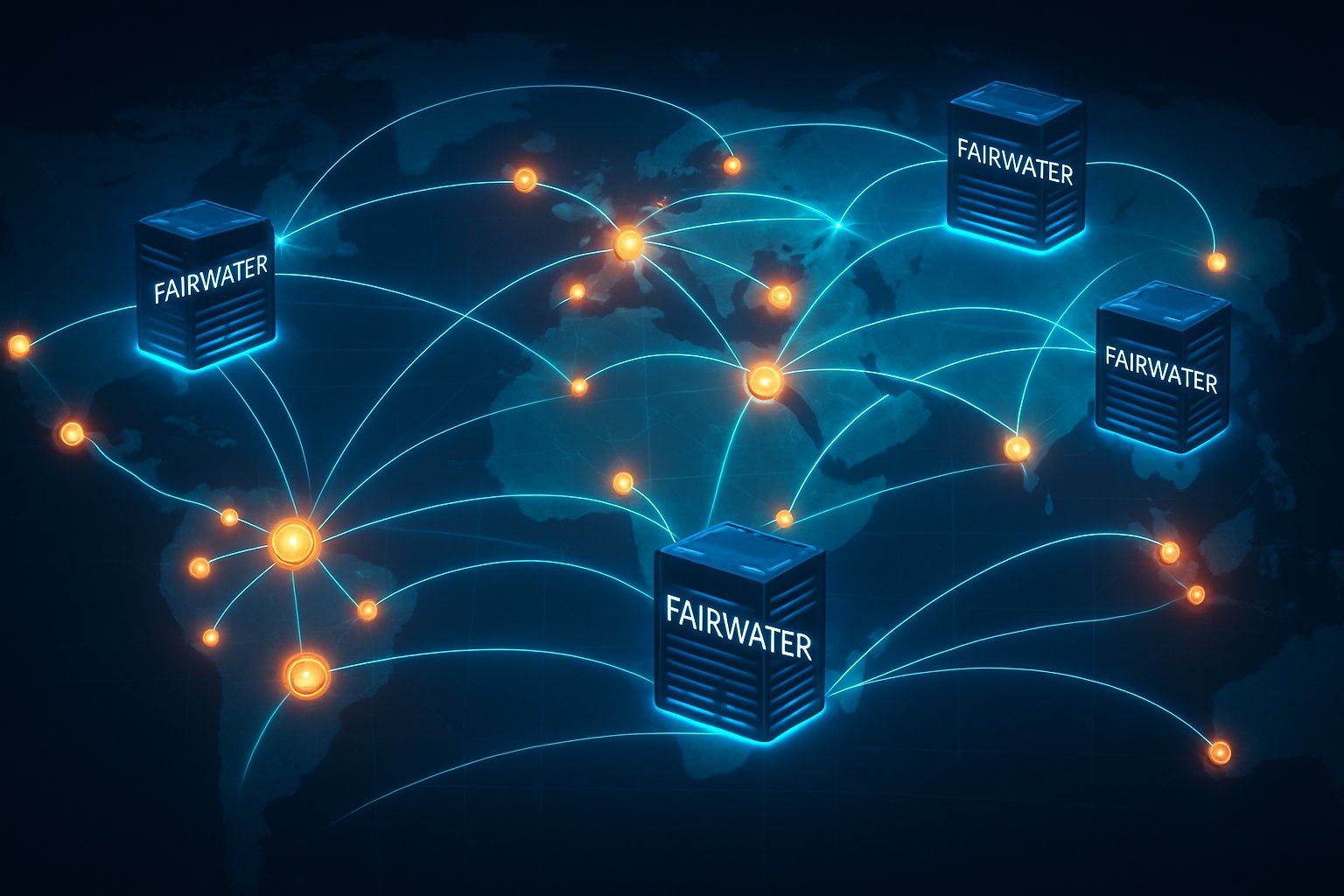
Future AI superfactories may function as interconnected global intelligence networks.
Instead of isolated facilities, AI ecosystems could collaborate dynamically across continents, sharing computational workloads and learning collectively.
It’s almost like building a planetary-scale brain.
Conclusion
The next generation of distributed AI superfactories is poised to become one of the most important technological developments of the 21st century. These intelligent infrastructures are transforming how we process information, solve problems, and innovate across nearly every industry.
From healthcare breakthroughs and autonomous transportation to smart manufacturing and real-time financial analysis, distributed AI is rapidly reshaping the world around us.
Of course, challenges remain. Energy demands, cybersecurity threats, and ethical concerns must be addressed carefully. Yet despite these obstacles, the momentum behind AI superfactories is undeniable.
We are entering an era where intelligence itself becomes industrialized.
And just like electricity transformed the world a century ago, distributed AI superfactories may become the invisible engine powering the future of humanity.
FAQs
1. What is a distributed AI superfactory?
A distributed AI superfactory is a large-scale computing ecosystem that uses interconnected hardware and software systems to train and deploy AI models efficiently across multiple locations or devices.
2. Why are AI superfactories important?
They provide the massive computational power needed for advanced AI applications like autonomous vehicles, medical diagnostics, robotics, and large language models.
3. How do AI superfactories differ from traditional data centers?
Traditional data centers mainly focus on storage and cloud services, while AI superfactories are specifically optimized for AI training, inference, and distributed computing workloads.
4. What industries benefit most from distributed AI systems?
Healthcare, manufacturing, finance, transportation, logistics, and cybersecurity are among the industries seeing major benefits from AI superfactories.
5. Are AI superfactories environmentally sustainable?
They can be energy-intensive, but many organizations are adopting renewable energy sources, energy-efficient hardware, and advanced cooling technologies to improve sustainability.