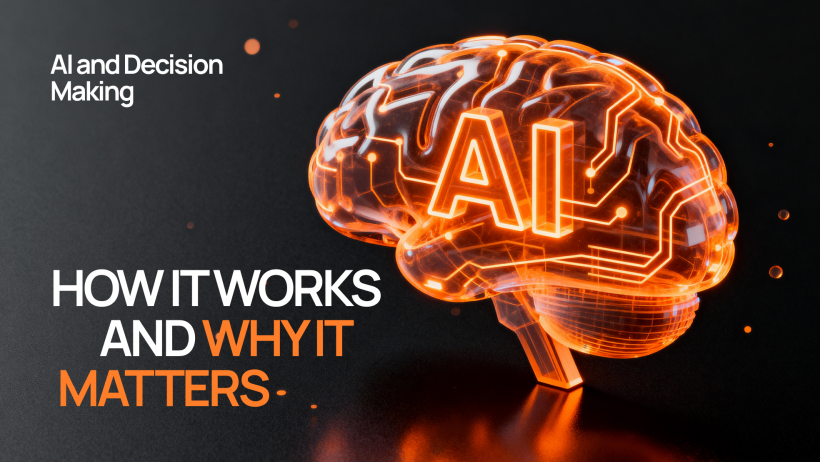
How AI Helps You Make Better Business Decisions Faster
Introduction to AI in Business Decision-Making
Let’s face it—business decisions aren’t getting any easier. Markets change overnight, customer expectations evolve constantly, and competition is fiercer than ever. So how do you keep up? This is where Artificial Intelligence (AI) steps in like a supercharged assistant. AI doesn’t just help you make decisions—it helps you make better decisions, and faster than ever before.
What is Artificial Intelligence in Business?
AI in business refers to the use of smart algorithms and systems that mimic human intelligence to analyze data, predict outcomes, and automate decisions. Instead of relying purely on gut feelings or outdated reports, companies now lean on AI to guide their strategies.
Key Components of AI
Machine Learning
Machine Learning allows systems to learn from data and improve over time without being explicitly programmed. Think of it as teaching your business software to “get smarter” with experience.
Natural Language Processing
NLP helps machines understand and respond to human language. Ever chatted with a customer support bot? That’s NLP in action.
Predictive Analytics
Predictive analytics uses historical data to forecast future outcomes. It’s like having a crystal ball—but backed by data.
Why Speed Matters in Business Decisions
Time is money—literally. The faster you make informed decisions, the quicker you can act on opportunities or avoid risks.
The Cost of Slow Decisions
Delayed decisions can lead to missed opportunities, declining customer satisfaction, and even financial losses. Imagine spotting a market trend too late—it’s like arriving at a party after everyone’s gone.
Competitive Advantage Through Speed
Businesses that act quickly often outperform competitors. Speed allows you to adapt, innovate, and stay ahead of the curve.
How AI Enhances Decision-Making
AI transforms decision-making from guesswork into a data-driven process.
Data Analysis at Scale
AI can process massive amounts of data in seconds—something humans could never do manually. This means you get insights faster and more accurately.
Real-Time Insights
Gone are the days of waiting for weekly reports. AI provides real-time data, helping you make decisions on the fly.
Pattern Recognition
AI excels at spotting patterns and trends that humans might miss. Whether it’s customer behavior or market shifts, AI connects the dots effortlessly.
AI Tools Used in Business Decision-Making
There’s a growing ecosystem of AI tools designed to help businesses make smarter decisions.
Business Intelligence Platforms
These tools analyze data and present it in easy-to-understand dashboards, helping leaders make informed choices quickly.
AI-Powered CRM Systems
Customer Relationship Management systems use AI to predict customer needs, improve engagement, and boost sales.
Automation Tools
Automation tools handle repetitive tasks, freeing up time for strategic thinking and decision-making.
Benefits of Using AI in Decision-Making
AI doesn’t just speed things up—it improves quality too.
Increased Accuracy
AI minimizes errors by relying on data rather than assumptions.
Reduced Human Bias
Humans are naturally biased, but AI focuses purely on data, leading to more objective decisions.
Cost Efficiency
By automating processes and reducing errors, AI helps businesses save money in the long run.
Real-World Examples of AI in Business
Let’s look at how different industries are using AI to make smarter decisions.
Retail Industry
Retailers use AI to predict demand, optimize inventory, and personalize customer experiences. Ever wondered how online stores recommend products? That’s AI at work.
Finance Sector
Banks and financial institutions use AI for fraud detection, risk assessment, and investment strategies. It’s like having a financial analyst working 24/7.
Healthcare Industry
AI helps doctors diagnose diseases, predict patient outcomes, and optimize treatment plans. Faster decisions here can literally save lives.
Challenges of AI Adoption
Of course, AI isn’t without its hurdles.
Data Privacy Concerns
Handling large amounts of data raises questions about privacy and security. Businesses must tread carefully.
High Implementation Costs
Setting up AI systems can be expensive, especially for small businesses.
Skill Gaps
Not every organization has the expertise needed to implement and manage AI effectively.
Best Practices for Implementing AI
Want to make the most of AI? Here’s how to do it right.
Start Small and Scale
Begin with small projects and expand as you see results. Don’t try to do everything at once.
Invest in Data Quality
AI is only as good as the data it uses. Clean, accurate data is essential.
Train Your Team
Equip your employees with the skills they need to work alongside AI tools.
The Future of AI in Business Decisions
AI is evolving rapidly, and its role in decision-making will only grow stronger.
AI and Predictive Decision-Making
Future AI systems will not just suggest decisions—they’ll predict outcomes with incredible accuracy.
Human-AI Collaboration
The future isn’t about AI replacing humans—it’s about humans and AI working together to make smarter decisions.
Conclusion
AI is no longer a luxury—it’s a necessity for businesses that want to thrive in a fast-paced world. By analyzing data, providing real-time insights, and reducing bias, AI empowers organizations to make better decisions faster. Think of AI as your business co-pilot—always ready with insights, always learning, and always helping you stay ahead of the competition. The sooner you embrace it, the better positioned you’ll be for the future.
FAQs
1. How does AI improve decision-making speed?
AI processes large datasets instantly, providing real-time insights that eliminate delays in analysis.
2. Is AI suitable for small businesses?
Yes, many affordable AI tools are designed specifically for small and medium-sized businesses.
3. Can AI replace human decision-makers?
No, AI supports humans by providing insights, but final decisions still require human judgment.
4. What industries benefit most from AI decision-making?
Industries like retail, finance, healthcare, and marketing benefit significantly from AI-driven decisions.
5. What is the biggest challenge of using AI in business?
The biggest challenge is ensuring data quality and addressing privacy concerns while implementing AI systems.