Why Scaling a Business Starts with Better Systems
Introduction: Growth Isn't the Same as Scaling
Every entrepreneur dreams of building a thriving business. More customers, higher revenue, expanding teams, and bigger opportunities all sound exciting. But here's the reality—many businesses grow only to discover that success brings new challenges. Suddenly, emails pile up, customer requests slip through the cracks, projects miss deadlines, and employees spend more time fixing mistakes than creating value.
That's because growth without systems is like building a skyscraper on a weak foundation. The higher you build, the greater the risk of collapse.
Scaling isn't about working longer hours or hiring more people. It's about creating repeatable, efficient, and reliable systems that allow your business to handle increased demand without sacrificing quality or profitability.
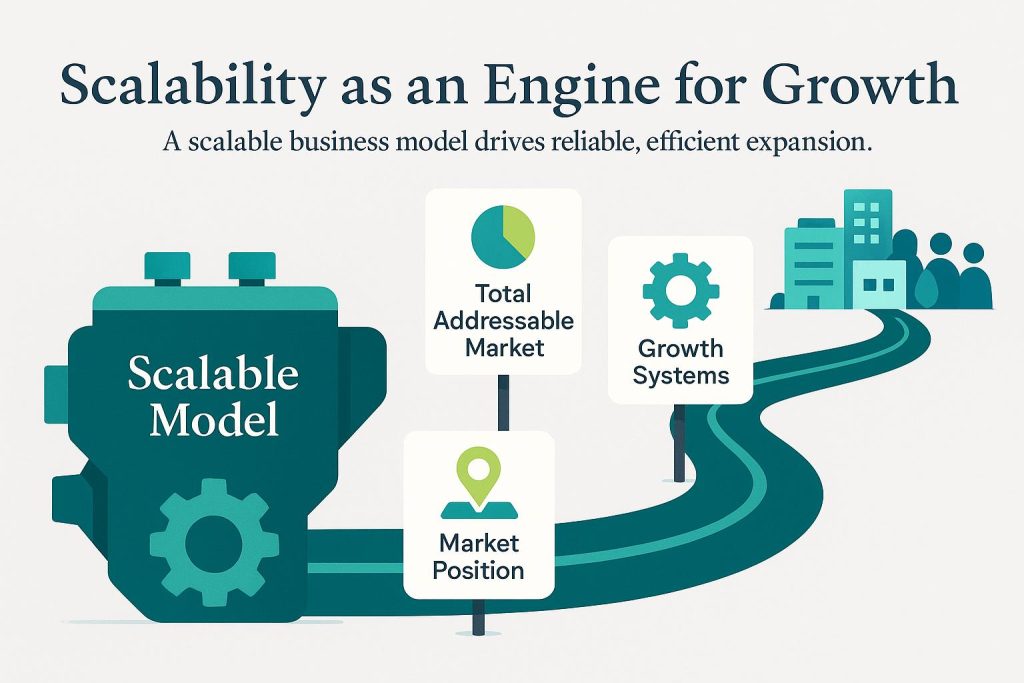
In today's competitive landscape, better systems have become the true engine behind sustainable business growth.
What Does Business Scaling Really Mean?
Scaling means increasing revenue without increasing costs at the same rate. Instead of simply adding more employees for every new client, scalable businesses improve efficiency so existing resources accomplish more.
Think of a restaurant.
One restaurant may require hiring another chef every time customer demand increases.
Another restaurant develops standardized recipes, kitchen workflows, digital ordering, and inventory automation. It serves twice as many customers with only minor staffing increases.
That's scaling.
Growth vs. Scale: Understanding the Difference
Business growth often requires proportional investment.
- More customers
- More employees
- More expenses
Scaling focuses on improving efficiency.
- Better technology
- Better workflows
- Better automation
- Better decision-making
The difference determines long-term profitability.
Why Businesses Hit Growth Ceilings
Many organizations eventually experience operational bottlenecks because their internal processes never evolved alongside their customer base.
Common warning signs include:
- Missed deadlines
- Employee burnout
- Poor customer experience
- Communication breakdowns
- Revenue plateaus
- Increasing operational costs
The solution isn't simply hiring more people—it starts with fixing the systems behind the work.
Why Systems Matter More Than Hustle
Hard work builds businesses.
Systems grow them.
Many founders become trapped inside daily operations. Every decision depends on them. Every approval waits for them. Every customer problem lands in their inbox.
That's not a scalable business.
That's self-employment at a larger scale.
Well-designed systems remove unnecessary dependence on individual people.
The Cost of Manual Processes
Manual work introduces delays and inconsistency.
Examples include:
- Entering customer information by hand
- Creating invoices manually
- Sending follow-up emails individually
- Tracking projects using spreadsheets
- Approving repetitive requests
Each manual task consumes valuable time while increasing the likelihood of mistakes.
Building Predictable Operations
Successful companies operate consistently because every employee follows established procedures.
Predictability creates:
- Better customer experiences
- Faster onboarding
- Higher productivity
- Lower operating costs
- Easier expansion
Consistency builds trust, and trust drives growth.
Core Systems Every Growing Business Needs
Scaling begins with strengthening your operational foundation.
Sales Systems
Sales should never depend on memory.
Effective sales systems include:
- Lead tracking
- Automated follow-ups
- CRM management
- Sales pipelines
- Performance dashboards
These systems ensure every opportunity receives proper attention.
Marketing Systems
Marketing generates demand.
Without systems, campaigns become inconsistent.
Effective marketing systems manage:
- Content calendars
- Social media scheduling
- Email automation
- Lead nurturing
- Campaign analytics
Consistency produces stronger long-term results.
Customer Support Systems
Customer satisfaction determines retention.
Support systems help businesses manage:
- Ticketing
- Live chat
- Knowledge bases
- AI assistants
- Response tracking
Fast support creates loyal customers.
Financial Management Systems
Financial visibility keeps businesses healthy.
Reliable systems handle:
- Expense tracking
- Payroll
- Budget forecasting
- Cash flow monitoring
- Tax preparation
Good financial systems prevent expensive surprises.
Project Management Systems
As teams grow, coordination becomes increasingly difficult.
Project management systems organize:
- Tasks
- Deadlines
- Resources
- Team communication
- Progress reporting
Everyone stays aligned toward shared goals.
Automation: The Secret Weapon for Scaling
Automation eliminates repetitive work while improving consistency.
Instead of replacing employees, automation allows them to focus on higher-value activities.
Reducing Repetitive Tasks
Businesses can automate:
- Appointment scheduling
- Email responses
- Invoice generation
- Customer onboarding
- Lead qualification
- Reporting
Small automations often save hundreds of hours annually.
Improving Accuracy and Productivity
Humans naturally make mistakes.
Systems don't forget steps.
Automation improves:
- Data accuracy
- Response speed
- Operational consistency
- Employee productivity
The result is higher output with fewer resources.
How Technology Supports Better Systems
Technology acts as the backbone of modern scalable businesses.
CRM Platforms
Customer Relationship Management software centralizes customer interactions.
Benefits include:
- Better sales visibility
- Improved customer communication
- Higher conversion rates
- Personalized experiences
ERP Solutions
Enterprise Resource Planning systems connect departments into one unified platform.
Finance, inventory, HR, purchasing, and operations work together seamlessly.
Information flows instead of becoming trapped in silos.
AI-Powered Business Tools
Artificial intelligence accelerates business efficiency.
AI now assists with:
- Customer service
- Predictive analytics
- Content generation
- Workflow automation
- Decision support
Businesses that leverage AI gain significant competitive advantages.
Creating Standard Operating Procedures (SOPs)
Systems exist only when they're documented.
That's where Standard Operating Procedures come in.
Documenting Processes
Every recurring activity should have clear documentation.
Examples include:
- Employee onboarding
- Client onboarding
- Product delivery
- Marketing campaigns
- Customer support
Clear documentation minimizes confusion.
Training Teams Efficiently
New employees become productive faster when they follow documented systems.
Training shifts from constant explanation to structured learning.
This improves consistency across the organization.
Building a System-Driven Company Culture
Technology alone cannot scale a business.
People must embrace systems.
Encouraging Accountability
Clearly defined responsibilities create ownership.
Employees understand:
- Expectations
- Deadlines
- Performance metrics
- Decision authority
Accountability strengthens execution.
Continuous Improvement
Great systems evolve.
Regular reviews identify:
- Bottlenecks
- Inefficiencies
- Customer feedback
- Emerging opportunities
Continuous optimization keeps businesses competitive.
Common Mistakes Businesses Make When Scaling
Hiring Too Quickly
Adding employees without improving workflows simply increases complexity.
Fix processes before expanding teams.
Ignoring Data
Successful decisions rely on measurable insights.
Track:
- Revenue
- Customer acquisition
- Retention
- Productivity
- Profit margins
Data reveals what intuition often misses.
Overcomplicating Systems
Complex systems discourage adoption.
The best systems are simple, repeatable, and easy to improve.
Practical Steps to Build Better Systems
If you're preparing to scale, start here:
- Map every core business process.
- Identify repetitive manual tasks.
- Automate low-value activities.
- Standardize recurring workflows.
- Document procedures.
- Measure performance continuously.
- Invest in scalable technology.
- Train employees consistently.
- Review systems quarterly.
- Improve incrementally rather than all at once.
Small improvements compound into transformational growth.
The Future of Scalable Businesses
Tomorrow's most successful organizations won't necessarily be the largest.
They'll be the most efficient.
AI, automation, cloud technology, predictive analytics, and integrated business platforms are reshaping how companies operate.
Businesses that build adaptable systems today will respond faster to changing markets, customer expectations, and technological innovation.
Scalability is no longer optional—it's becoming a competitive necessity.
Conclusion
Every thriving business eventually reaches a point where hard work alone is no longer enough. Sustainable growth depends on systems that simplify operations, improve consistency, and empower employees to perform at their best. Whether you're managing a startup or an established enterprise, investing in scalable systems today creates the flexibility and resilience needed for tomorrow's opportunities. Instead of asking, "How can we work harder?" successful leaders ask, "How can our systems work smarter?" The answer to that question often determines whether a business merely grows or truly scales.
Frequently Asked Questions
1. Why are systems important for business scaling?
Systems create consistency, reduce manual work, improve efficiency, and allow businesses to grow without proportional increases in costs.
2. What's the difference between growth and scaling?
Growth typically requires additional resources for increased revenue, while scaling focuses on increasing revenue through greater efficiency and optimized operations.
3. Which business system should be implemented first?
Most businesses benefit from implementing CRM and project management systems first, followed by financial automation and customer support workflows.
4. Can small businesses benefit from automation?
Absolutely. Even simple automation tools can save time, reduce errors, improve customer experiences, and free employees to focus on strategic work.
5. How often should business systems be reviewed?
Businesses should review their systems quarterly or whenever significant operational changes occur to ensure processes remain efficient and aligned with business goals.