Microsoft Unveils Maia 200: The Next Leap in AI Power and Performance
Introduction: A New Chapter in Microsoft's AI Journey
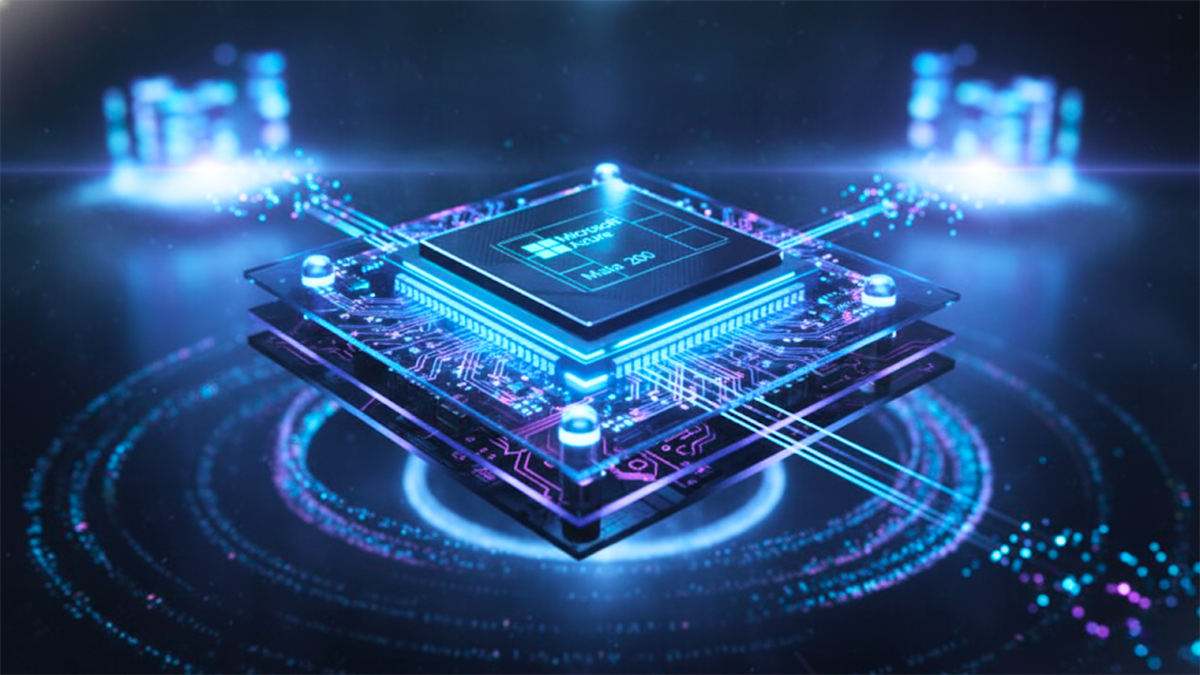
Microsoft is no stranger to big bets on artificial intelligence. From cloud computing to productivity tools infused with AI magic, the company has been steadily building toward something bigger. Enter Maia 200, Microsoft’s latest AI accelerator, and yes—it’s kind of a big deal. This isn’t just another chip announcement. It’s a statement. A declaration that Microsoft wants deeper control over how AI is built, trained, and deployed at scale.
So, what makes Maia 200 special? Let’s unpack it—piece by piece. 🧩\
What Is Maia 200? An Overview
At its core, Maia 200 is a custom-designed AI accelerator built specifically to handle the heavy lifting required by modern artificial intelligence workloads. Think massive language models, generative AI, and data-hungry machine learning systems that don’t just sip power—they gulp it.
Unlike off-the-shelf hardware, Maia 200 is purpose-built for Microsoft’s needs, particularly within the Azure ecosystem. This allows tighter integration, better performance tuning, and—perhaps most importantly—greater efficiency.
Why Microsoft Built Maia 200
Why go custom? Simple: control. By designing its own silicon, Microsoft can optimize every layer of the AI stack—from hardware to software—without waiting on third-party roadmaps. It’s like cooking in your own kitchen instead of ordering takeout every night. You choose the ingredients, the spices, and the timing.
How Maia 200 Fits Into Microsoft’s AI Ecosystem
Maia 200 isn’t floating around on its own island. It’s tightly woven into Microsoft’s broader AI strategy, working hand-in-hand with Azure, developer tools, and enterprise AI services. The result? Faster deployment, smoother scaling, and more predictable performance for customers.
Architecture and Design Innovations
This is where things get really interesting. Maia 200 isn’t just powerful—it’s smartly designed.
Custom Silicon: Microsoft’s Strategic Shift
Custom silicon allows Microsoft to fine-tune the architecture specifically for AI workloads. Instead of a general-purpose design, Maia 200 focuses on matrix operations, parallel processing, and high-bandwidth memory access—the bread and butter of AI computation.
Optimized for Large-Scale AI Models
Large language models don’t play nice with limited hardware. Maia 200 is engineered to handle massive parameter counts and complex training cycles without breaking a sweat.
Energy Efficiency and Thermal Design
Power is expensive. Heat is annoying. Maia 200 tackles both with an efficiency-first mindset, delivering more performance per watt and smarter thermal management. Your data center (and electricity bill) will thank you.
Performance Gains: Faster, Smarter, Stronger
Let’s talk numbers—without drowning in them.
Training AI Models at Scale
Training times shrink dramatically when hardware is purpose-built. Maia 200 accelerates model training, allowing researchers and engineers to iterate faster and experiment more freely.
Inference Performance Improvements
Inference is where AI meets the real world. Maia 200 boosts responsiveness and throughput, meaning end users get quicker, smoother AI-powered experiences.
Maia 200 vs Traditional AI Accelerators
How does it stack up against GPUs and other accelerators?
Comparisons With GPUs and TPUs
While GPUs remain versatile, Maia 200 is laser-focused. That specialization translates into better efficiency for specific AI tasks, especially within Microsoft’s own platforms.
Latency, Throughput, and Cost Efficiency
Lower latency. Higher throughput. Better cost predictability. That’s the holy trinity—and Maia 200 gets impressively close.
Cloud Integration: Powering Azure AI
This chip truly shines in the cloud.
Seamless Azure Deployment
Because Maia 200 is designed for Azure, integration is smooth. No awkward adapters. No Frankenstein setups. Just clean, scalable deployment.
Benefits for Enterprise Customers
Enterprises gain faster AI workloads, stronger security, and more consistent performance—all without reinventing their infrastructure.
Security and Responsible AI at the Core
Power means responsibility. Microsoft knows this.
Built-In Security Features
Maia 200 includes hardware-level security protections, helping safeguard sensitive data and AI models from emerging threats.
Supporting Responsible AI Development
From compliance to transparency, the hardware supports Microsoft’s broader commitment to responsible AI practices.
Real-World Use Cases and Applications
This isn’t theoretical tech—it’s practical.
Generative AI and Large Language Models
Chatbots, copilots, content generation—Maia 200 handles the heavy lifting behind the scenes.
Data Analytics and Scientific Research
From climate modeling to healthcare research, faster AI means faster discoveries.
What Maia 200 Means for Developers
Good news: developers aren’t left out.
Tooling, SDKs, and Developer Experience
Microsoft is aligning Maia 200 with familiar tools, reducing friction and making adoption easier for teams already building on Azure.
Industry Impact and Competitive Landscape
This move sends ripples across the tech world.
How Maia 200 Challenges the Status Quo
Custom AI silicon from a cloud giant raises the bar—and nudges competitors to rethink their own strategies.
Future Roadmap and What Comes Next
Maia 200 isn’t the finish line. It’s the starting gun. Expect refinements, successors, and deeper AI-hardware integration in the years ahead.
Conclusion: Why Maia 200 Is a Big Deal
Maia 200 represents more than raw performance. It signals Microsoft’s intent to own its AI destiny—hardware, software, and everything in between. For businesses, developers, and the future of AI itself, that’s a game-changing move.
FAQs
1. What is Microsoft Maia 200 used for?
Maia 200 is designed to accelerate AI training and inference workloads, especially within Azure.
2. Is Maia 200 available to all Azure customers?
Availability depends on region and service, with gradual rollout expected.
3. How is Maia 200 different from GPUs?
It’s purpose-built for AI, offering better efficiency for specific workloads compared to general-purpose GPUs.
4. Does Maia 200 support large language models?
Yes, it’s optimized for training and running large-scale AI models.
5. Will Microsoft release future versions of Maia?
While nothing is official, Maia 200 strongly suggests a long-term custom silicon roadmap.