Wearable Devices and Rokid Partner for Neural Gesture Control in AI Smart Glasses
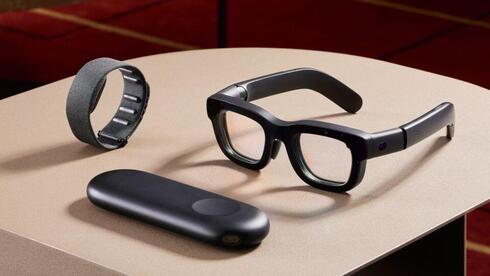
A Leap Forward in Wearable AI Technology
Imagine controlling your augmented reality glasses with just a subtle flick of your wrist—no clunky controllers, no awkward voice commands in a crowded room. That’s the vision Wearable Devices and Rokid are pursuing. On December 24, 2025, the two companies announced a partnership to integrate neural gesture control with AI-powered AR glasses—a move that promises to make smart glasses feel like a natural extension of yourself.
As AR and VR transition from futuristic novelties to everyday tools, intuitive controls are key. Current smart glasses often rely on voice commands or handheld remotes, which can feel cumbersome. This collaboration combines Wearable Devices’ Mudra Link neural wristband with Rokid’s ultra-light AR glasses to deliver a seamless, hands-free experience powered by artificial intelligence.
Understanding the Technologies
Mudra Link Neural Wristband
At the core of Wearable Devices’ offering is Mudra Link—a sleek wrist-worn device that functions as a neural interface for your hands. Unlike traditional gesture controls, which rely on cameras or motion sensors, Mudra Link uses surface nerve conductance (SNC) sensors to detect subtle bioelectric signals from finger and hand movements. Advanced AI algorithms then translate these signals into precise digital commands—like pinching to zoom or swiping to navigate—without obvious hand movements.
Mudra Link is Bluetooth-compatible, works across multiple operating systems, and allows users to personalize gestures to their preferences. This technology is ideal for gaming, productivity, and extended reality (XR) applications, offering a discreet and natural way to interact with devices while enhancing privacy.
Rokid’s AR Glasses
Rokid brings its acclaimed AR glasses to the partnership, weighing just 49 grams, making them among the lightest full-featured AI and AR glasses in the world. These glasses include a 12MP first-person camera, Micro LED waveguide displays for crisp visuals, and integrated audio.
Rokid Glasses feature multimodal AI capabilities, handling tasks like translation, object recognition, navigation, and transcription—all powered on-device to minimize latency. With CES Innovation Awards and a strong developer community, Rokid continues to make AR practical and accessible.
The Partnership: Ready for Consumers
Mudra Link and Rokid Glasses are designed to work together straight out of the box, with pre-mapped gestures and a simple setup flow. Users can pair the devices easily and start controlling AR interfaces with natural hand movements immediately.
The companies plan to release a consumer bundle in Q2 2026, with live demonstrations at CES 2026 (January 6–9 in Las Vegas). Attendees can try the combo at Wearable Devices’ booth (LVCC, Central Hall, Booth 15650) or Rokid’s (Booth 17214).
Executives are enthusiastic about the potential. Asher Dahan, CEO of Wearable Devices, said:
"Smart glasses don’t win on features alone—they win when control feels second nature. Together with Rokid, we are making hands-free AI control effortless."
Zoro Shao, Global GM of Rokid, added:
"Mudra Link provides an out-of-the-box gesture control option that matches how people naturally move their hands, complementing our lightweight AI glasses perfectly."
Benefits and Innovations
This integration addresses major pain points in current AR wearables. Voice commands can be impractical in noisy environments, and bulky controllers defeat the purpose of lightweight glasses. Neural gesture control via Mudra Link offers faster response times, lower cognitive effort, and better privacy, as subtle gestures remain personal.
Applications span across sectors:
- Productivity: Scroll through documents during a commute.
- Gaming: Immersive controls without interrupting the experience.
- Education: Interactive AR lessons.
- Accessibility: Aid for users with mobility challenges.
This approach exemplifies “embodied AI,” where devices intuitively anticipate human intent. Combined with edge computing and on-device AI, it ensures low-latency, real-time interactions, paving the way for mainstream AR adoption.
Market Impact and Future Outlook
The announcement caused Wearable Devices’ stock (NASDAQ: WLDS) to jump nearly 28% initially, reflecting investor excitement. As the AR/VR market grows, hybrid wearables like glasses plus wristbands could accelerate the shift toward ambient computing—where AI blends seamlessly into daily life.
This partnership signals a future where AR glasses are as natural to wear as sunglasses, transforming everyday activities like virtual meetings or hands-free productivity. While challenges like regulation and competition remain, the potential for user-centric, intuitive technology is enormous.
Conclusion: A More Intuitive Digital Future
The Wearable Devices and Rokid partnership is more than a gadget announcement—it’s a glimpse into how we may interact with AI in our daily lives. By combining neural gesture control with ultra-light AR glasses, the companies are paving the way for touchless, intuitive experiences that feel truly human.
CES 2026 will be the first chance to see it in action—and it could be the spark that brings AR into mainstream reality. Are you ready to wave goodbye to traditional controls?