The Companies Winning in 2026 All Run on One Invisible System

Introduction: The Hidden Engine Behind Modern Business
Have you ever wondered why some companies seem to move faster, innovate quicker, and consistently outperform their competitors? At first glance, it might look like they simply have more money, better employees, or stronger leadership. While those factors matter, they're not the whole story.
In 2026, the most successful businesses share something far more powerful: an invisible system that operates quietly behind the scenes. Customers rarely see it. Competitors often underestimate it. Yet it influences nearly every decision, interaction, and outcome.
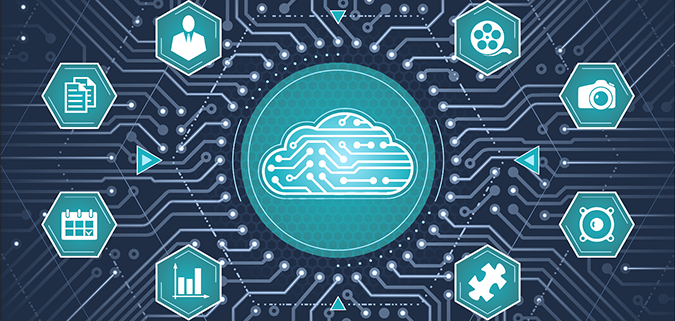
This invisible system is the combination of connected data, intelligent automation, AI-powered insights, and workflow orchestration working together as one unified business engine. Companies that master this system are pulling ahead at an unprecedented pace.
What Is the Invisible System?
The invisible system isn't a single piece of software. It's an ecosystem of technologies, processes, and intelligence that enables organizations to operate efficiently and make smarter decisions.
Think of it like the nervous system in the human body. You don't see it, but it coordinates everything from movement to decision-making. Similarly, businesses rely on interconnected systems to synchronize operations, customer experiences, and strategic initiatives.
Why Most People Never Notice It
Customers see products. Investors see revenue. Employees see tasks. However, few people see the underlying infrastructure connecting every action across the organization.
The invisible system works quietly in the background by:
- Connecting departments
- Synchronizing information
- Automating repetitive work
- Generating predictive insights
- Supporting real-time decisions
Because it operates behind the scenes, its impact is often underestimated.
How It Works Behind the Scenes
Imagine a customer placing an order online. Within seconds, inventory systems update, payment platforms verify transactions, logistics providers receive shipping instructions, and customer service tools gain access to the order details.
No human manually coordinates these actions. The invisible system orchestrates everything automatically.
The Evolution of Business Operations
Business operations have undergone a dramatic transformation over the last few decades.
From Manual Processes to Digital Workflows
Not long ago, organizations relied heavily on paperwork, spreadsheets, phone calls, and manual approvals. These processes consumed time and introduced countless opportunities for errors.
Digital transformation changed the game. Businesses began replacing paper-based workflows with software-driven operations, creating new levels of efficiency and transparency.
The Rise of Intelligent Automation
Automation initially focused on repetitive tasks. Today, intelligent automation goes much further.
Modern systems can:
- Analyze customer behavior
- Predict future demand
- Detect anomalies
- Recommend actions
- Execute workflows automatically
This shift allows employees to focus on higher-value activities rather than routine administrative work.
The Core Components of the Invisible System
Several foundational elements power this business advantage.
Data Integration
Data is often compared to oil, but a better comparison might be electricity. It powers everything.
The challenge isn't collecting data. Most companies already have more data than they can manage. The real challenge is connecting it.
Successful organizations integrate information from:
- CRM platforms
- Marketing tools
- Financial systems
- Customer support software
- Supply chain applications
When data flows seamlessly, decision-making improves dramatically.
Artificial Intelligence
Artificial intelligence acts as the brain of the invisible system.
Instead of merely storing information, AI interprets it. It identifies patterns, predicts outcomes, and recommends actions.
In 2026, leading companies use AI to:
- Forecast sales
- Personalize marketing
- Improve customer service
- Optimize pricing
- Enhance operational efficiency
The result is smarter business decisions at every level.
Automation and Orchestration
Automation handles tasks. Orchestration coordinates entire processes.
Think of automation as a musician playing an instrument, while orchestration is the conductor leading the entire orchestra.
Without orchestration, automation becomes fragmented. With orchestration, every department works in harmony.
Real-Time Decision Making
The most successful organizations no longer wait days or weeks for reports.
Instead, they operate using real-time intelligence. Dashboards, predictive analytics, and automated alerts provide immediate visibility into business performance.
This allows leaders to respond to opportunities and threats before competitors even recognize them.
Why Winning Companies Depend on It
The invisible system isn't just a technological advantage. It's a business necessity.
Increased Productivity
Employees spend less time on repetitive tasks and more time on strategic work.
Automation reduces administrative burdens while improving consistency and accuracy.
As a result, teams accomplish more with fewer resources.
Better Customer Experiences
Today's customers expect fast, personalized, and seamless interactions.
The invisible system enables businesses to:
- Respond faster
- Personalize recommendations
- Resolve issues proactively
- Deliver consistent experiences
When customers feel understood, loyalty increases significantly.
Faster Innovation Cycles
Innovation thrives when organizations eliminate operational friction.
Connected systems provide instant feedback loops that help teams test ideas, gather insights, and improve products quickly.
The speed of innovation often determines market leadership.
Industries Being Transformed in 2026
Nearly every industry benefits from these capabilities.
Healthcare
Healthcare providers use integrated systems to improve patient outcomes, streamline administration, and enhance care coordination.
AI-driven diagnostics and predictive analytics are helping medical professionals make faster and more accurate decisions.
Finance
Financial institutions leverage intelligent systems to detect fraud, assess risk, automate compliance, and personalize services.
These capabilities improve both efficiency and customer trust.
Retail and E-Commerce
Retailers use connected systems to optimize inventory, personalize shopping experiences, and predict consumer demand.
Customers receive better experiences while businesses maximize profitability.
Manufacturing
Manufacturers rely on predictive maintenance, smart supply chains, and real-time monitoring to reduce downtime and improve production efficiency.
The result is higher output with fewer disruptions.
The Competitive Advantage Nobody Talks About
While many organizations focus on visible innovations, true competitive advantage often comes from operational excellence.
Operational Intelligence
Operational intelligence combines data analysis, monitoring, and predictive capabilities.
Leaders gain visibility into every aspect of the business, allowing them to make informed decisions quickly.
It's like having a GPS for your organization instead of driving blindfolded.
Predictive Business Models
The best companies no longer react to events—they anticipate them.
Predictive systems can forecast:
- Customer churn
- Market demand
- Equipment failures
- Revenue trends
- Supply chain disruptions
This foresight creates substantial strategic advantages.
Common Mistakes Companies Make
Despite the benefits, many organizations struggle to implement effective systems.
Focusing Only on Technology
Technology alone isn't the answer.
Many businesses purchase sophisticated tools without redesigning processes or training employees properly.
As a result, investments fail to deliver expected outcomes.
Ignoring Process Design
Even the most advanced technology cannot fix broken processes.
Organizations must first understand how work flows across departments before introducing automation and AI.
Strong processes create the foundation for sustainable success.
How Businesses Can Build Their Own Invisible System
Creating an invisible system doesn't happen overnight.
Assess Current Operations
Start by identifying inefficiencies, bottlenecks, and disconnected workflows.
Understanding current challenges helps prioritize improvements.
Connect Data Sources
Break down information silos by integrating systems and creating a unified data environment.
Connected data enables better visibility and decision-making.
Automate Repetitive Tasks
Focus on tasks that consume significant time while providing limited strategic value.
Automation generates immediate productivity gains and creates momentum for larger initiatives.
Use AI Strategically
Rather than implementing AI everywhere, focus on areas where it can generate measurable value.
Start small, prove success, and expand gradually.
The Future Beyond 2026
The invisible system will continue evolving.
Future organizations will combine AI, automation, machine learning, predictive analytics, and autonomous workflows into increasingly intelligent ecosystems.
Businesses will become more adaptive, responsive, and data-driven than ever before.
The gap between companies that embrace these systems and those that resist them will likely widen significantly.
Organizations that build strong foundations today will be best positioned to thrive tomorrow.
Conclusion
The companies dominating 2026 are not necessarily the largest, oldest, or most recognizable. Their real advantage lies in something most people never see: a powerful invisible system connecting data, automation, AI, and workflows into a unified operating model.
This hidden infrastructure enables faster decisions, better customer experiences, greater efficiency, and continuous innovation. While competitors focus on visible outcomes, industry leaders invest in the systems producing those outcomes.
In many ways, the future belongs to organizations that master what remains invisible. Behind every exceptional customer experience, rapid innovation, and business breakthrough is a system quietly making it all possible.
FAQs
1. What is meant by an invisible system in business?
An invisible system refers to the combination of integrated data, automation, artificial intelligence, and workflow orchestration that operates behind the scenes to improve business performance.
2. Why are invisible systems important in 2026?
They help organizations increase efficiency, improve decision-making, deliver better customer experiences, and maintain competitive advantages in rapidly evolving markets.
3. Can small businesses benefit from these systems?
Absolutely. Modern cloud-based tools make advanced automation and AI accessible to businesses of all sizes.
4. Is artificial intelligence the same as the invisible system?
No. AI is one component of the invisible system. The system also includes data integration, automation, analytics, and process orchestration.
5. How can a company start building an invisible system?
Companies should begin by assessing workflows, connecting data sources, automating repetitive tasks, and implementing AI solutions that address specific business challenges.