China's AI-Powered Green Energy Revolution: Innovations Driving Sustainability in 2025
Introduction: A Pivotal Moment in the Energy Transition
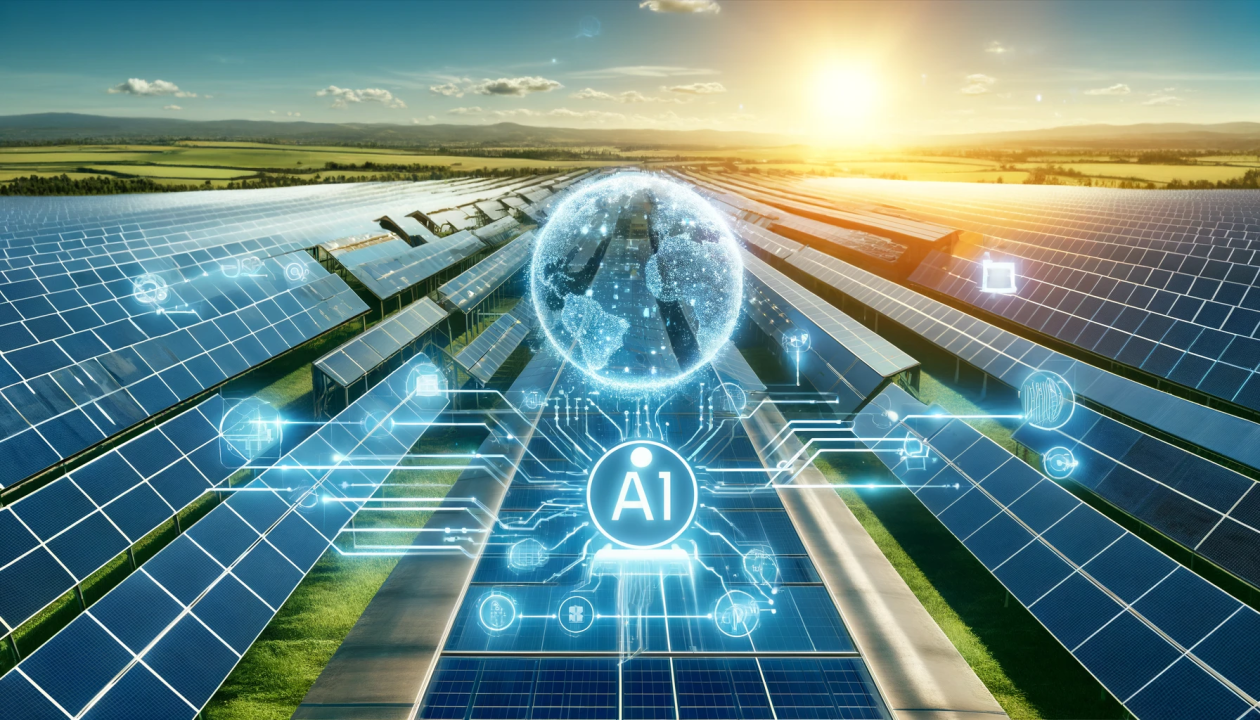
As 2025 draws to a close, China's integration of artificial intelligence with renewable energy has reached new heights, exemplified by a cutting-edge factory in Chifeng that uses AI to produce green hydrogen and ammonia entirely from wind and solar power. This development, highlighted in reports from December 22, 2025, underscores China's strategy to tackle the dual demands of explosive AI growth and climate goals. With renewables now driving a global shift—named the 2025 Breakthrough of the Year by scientific journals—this AI-driven approach is accelerating carbon neutrality ambitions while addressing data center energy surges.
The Chifeng Breakthrough: AI as the "Conductor" of Green Hydrogen Production
Nestled in northern China's vast wind-swept plains, Envision Energy's Chifeng facility represents a world-first in scalable, fully renewable industrial production. The plant operates on a dedicated off-grid system, drawing electricity directly from onsite wind turbines and solar farms. The core challenge of renewables—intermittency—is addressed through a sophisticated AI operating system that functions like an orchestral conductor.
Real-time weather monitoring allows the AI to dynamically adjust production: ramping up to full capacity when winds strengthen or solar output peaks, and scaling down efficiently during lulls to avoid waste. This ensures maximal utilization of green electricity for electrolyzers producing hydrogen, which is then converted to ammonia—a stable, transportable fuel ideal for decarbonizing hard-to-abate sectors like steelmaking, chemicals, and maritime shipping.
Envision's chief hydrogen engineer described the system as enabling autonomous synchronization with nature, turning volatile renewables into reliable industrial feedstock. The factory serves as a replicable blueprint, demonstrating how machine learning stabilizes energy-intensive processes previously reliant on steady fossil fuels.
Balancing AI's Energy Hunger with Green Optimization
China's explosive AI growth poses a significant energy challenge: data centers could consume over 1,000 TWh annually by 2030, rivaling entire nations' electricity use. Yet, Beijing views AI not just as a consumer but as a critical enabler for greener power systems.
In September 2025, authorities launched an ambitious "AI+ Energy" initiative, targeting over five specialized AI models for energy applications by 2027 and more than 100 scenarios by 2030. Key focuses include high-precision forecasting to reduce curtailment of wind and solar, intelligent grid dispatching, and virtual power plants (VPPs).
Cities like Shanghai have pioneered citywide VPPs, aggregating flexible resources from data centers, EV charging networks, and building systems via AI platforms. These virtual plants provide rapid demand response, shaving peak loads equivalent to small power stations while enhancing renewable absorption.
Innovations extend to unconventional solutions, such as underwater data centers near Shanghai drawing over 95% power from offshore wind. Predictive AI algorithms balance supply-demand with unprecedented accuracy, minimizing coal backups and curbing emissions—experts argue AI's optimization gains far outweigh its incremental footprint.
Broader Implications: Global Leadership and the Unstoppable Renewable Surge
China's dominance in clean tech is unchallenged: manufacturing 80% of global solar panels, 70% of wind turbines, and leading in battery production. Renewables growth has been explosive, with wind and solar additions in recent years equivalent to hundreds of nuclear plants, driving near-flat emissions despite economic expansion.
These AI-enhanced systems position China to export not just hardware but scalable models for green transitions worldwide—green tech exports neared $180 billion recently, aiding developing nations. Domestically, they bolster grid resilience amid fragmented generation and rising AI loads.
Challenges remain: intermittent renewables strain transmission, and coal lingers as backup. However, AI-driven flexibility—through big data analytics, IoT integration, and generative models—promises to resolve these, fostering a smarter, low-carbon ecosystem.
In an era defined by generative AI, edge computing, and quantum advancements, China's pragmatic focus on applied AI in energy could redefine global sustainability. This revolution transcends cleaner fuels; it's about intelligent systems making renewables dominant, ensuring economic growth aligns with planetary health. As 2026 approaches, China's trajectory will influence worldwide climate action and the AI-energy nexus.